
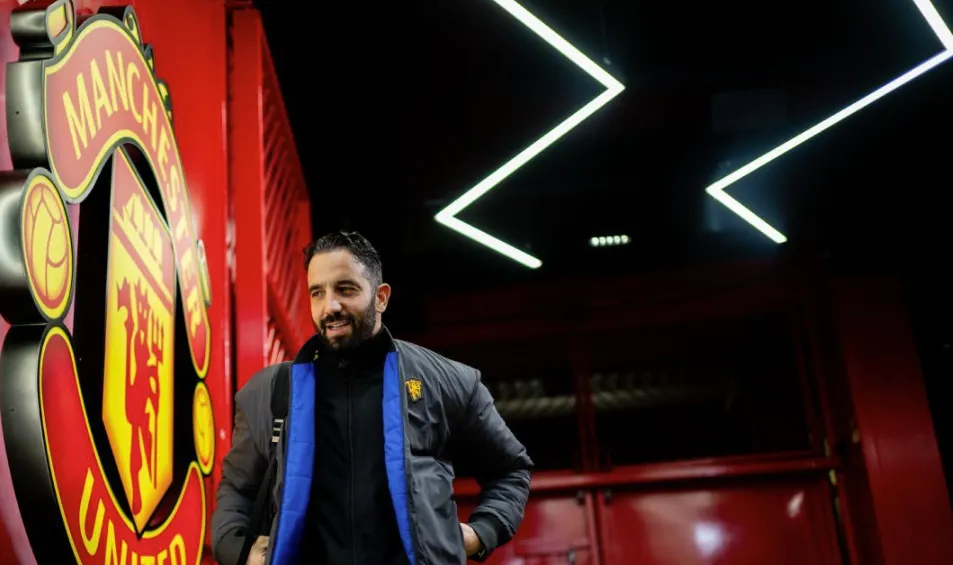
The beautiful game is constantly evolving, and few clubs feel the weight of tactical evolution more than Manchester United. As the 2025-26 season approaches, a fascinating debate is emerging among football analysts: should the Red Devils abandon the rigid system of Ruben Amorim that brought him fame at Sporting CP? The answer, according to many experts, is a resounding yes. This isn’t about doubting the Portuguese coach’s genius—it’s about recognizing that even the most successful systems need adaptation when transplanted from Primeira Liga to the unforgiving arena of the Premier League.
When Ruben Amorim arrived at Old Trafford, the expectation was that his 3-4-3 formation, which dominated Portuguese football, would bring a new identity to Manchester. However, early signs suggest that the system’s defensive vulnerabilities, particularly against counter-attacking teams, could be its undoing in England. The modern Premier League demands flexibility, and Amorim’s stubborn adherence to his philosophy might be the very thing that holds United back.
The High Line Conundrum: Learning From Barcelona’s Hansi Flick
One of the most intriguing tactical parallels this season has been the resurgence of Barcelona under Hansi Flick, who has implemented an extremely high defensive line. At first glance, this strategy seems suicidal—leaving acres of space behind the defense for pacey forwards to exploit. Yet, Flick has made it work through meticulous organization and the unique profile of his defenders.

For Manchester United, there’s a critical lesson here. Amorim’s system at Sporting relied on a high press and a relatively high line, but the Premier League’s athleticism makes this approach far riskier. The key difference between Flick’s Barcelona and Amorim’s potential United lies in the personnel.
Why Barcelona’s High Line Works While United’s Would Fail
Flick has engineered a system where:
- Center-backs are converted defensive midfielders:Players like Ronald Araújo and Jules Koundé are not just defenders; they are comfortable stepping into midfield, breaking lines with passing, and recovering quickly.
- Goalkeepers are sweepers:Marc-André ter Stegen’s ability to read the game and act as an extra defender is crucial for sweeping up through balls.
- Midfielders provide relentless cover:The engine room of Pedri, Gavi, and Frenkie de Jong works overtime to compress space before it reaches the back line.
In contrast, Manchester United‘s current squad structure under Amorim appears ill-suited for this model. The Red Devils lack a truly elite sweeper-keeper and their center-backs, while physically imposing, often lack the recovery speed and positional intelligence required to survive in a high-line system. Furthermore, the midfield balance remains a persistent issue, with defensive transitions often looking chaotic.
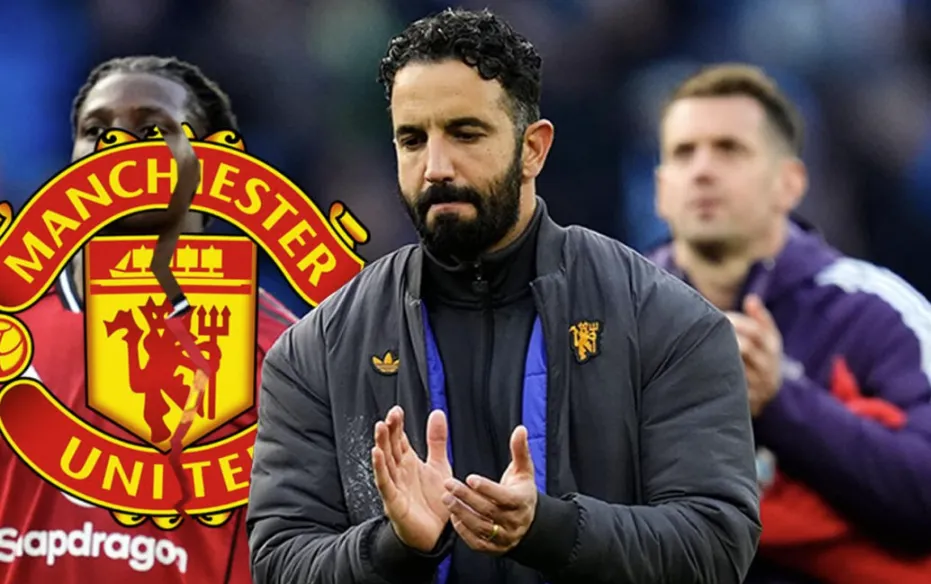
Debunking the Tactical Myths: What Manchester United Must Change
The romantic notion that a single coach and his “system” can magically transform a club is one of football’s most persistent myths. The reality is far more complex. Amorim’s system isn’t broken—it simply needs to be deconstructed and rebuilt for the English game.
Myth 1: The 3-4-3 is an Offensive Powerhouse
In Portugal, Amorim’s formation looked like a well-oiled attacking machine. Wing-backs pushed high, creating overloads. In England, however, the same system often becomes a 5-2-3 defensive block. The wing-backs get pinned back by opposing full-backs and wingers, leaving the two central strikers isolated.
Myth 2: A Single Tactical Identity Wins Trophies
The most successful Premier League teams—Pep Guardiola’s Manchester City, Jürgen Klopp’s Liverpool—didn’t just have one identity. They had multiple tactical plans. They could press high, sit deep, control possession, or counter-attack as the game demanded. Amorim must abandon the idea that his Sporting blueprint is a universal solution. He needs to develop a “Plan B” that isn’t just a different formation but a different philosophy.
Myth 3: Transfers Solve All Tactical Problems
While new signings are essential, the belief that buying a specific player type (like a “perfect” center-back for a high line) will fix everything is flawed. The true art of coaching lies in making the system work with the players you have. Amorim needs to adapt his principles to fit the strengths of players like Bruno Fernandes, Marcus Rashford, and Rasmus Højlund, rather than forcing them into a rigid tactical box.
The Path Forward: A Hybrid Approach for the 2025-26 Season
So, what should Manchester United actually do? The solution isn’t to abandon Amorim’s principles entirely but to integrate them with the realities of the Premier League.
Instead of a rigid 3-4-3, United should consider a fluid 3-2-5 in possession that shifts to a 4-4-2 or 4-5-1 out of possession. This hybrid setup would:
- Allow for defensive solidity:Dropping one of the wing-backs into a full-back role when defending prevents overloads.
- Protect the high line:A more compact defensive block reduces the space behind the defense.
- Unlock creative players:Bruno Fernandes can operate in a free role between the lines, connecting the midfield and attack.
- Utilize pace on the counter:With Rasmus Højlund’s speed, United can be devastating on the break, a tactic that a pure possession system often neglects.
This isn’t about turning Amorim into a defensive coach. It’s about recognizing that in the modern game, tactical purity is a luxury most teams cannot afford. The teams that win are those that can rapidly switch between modes—from relentless pressing to disciplined defending, from controlled possession to swift counter-attacks.
Conclusion: Embracing Evolution or Facing Stagnation
As Manchester United prepares for the 2025-26 season, the choice is stark. Ruben Amorim can remain a purist, clinging to his Sporting CP philosophy and hoping that time and signings will make it work. Or, he can evolve into a pragmatist, learning from coaches like Hansi Flick who prove that the best systems are those adapted to the competition, not imposed upon it.
For fans of Crickex, this tactical shift offers a fascinating narrative. Will we see a more resilient and versatile United? Or will they continue to be exposed by pace on the counter? The answer will define not just Amorim’s tenure but the entire trajectory of one of football’s most storied clubs.
What do you think? Is it time for Amorim to drop his dogma and embrace Premier League pragmatism? Share your thoughts in the comments below and stay tuned to Crickex for more in-depth football analysis as we break down every tactical nuance of the upcoming season.
